
REDEEM Bubble Flow Reactor
Overview:
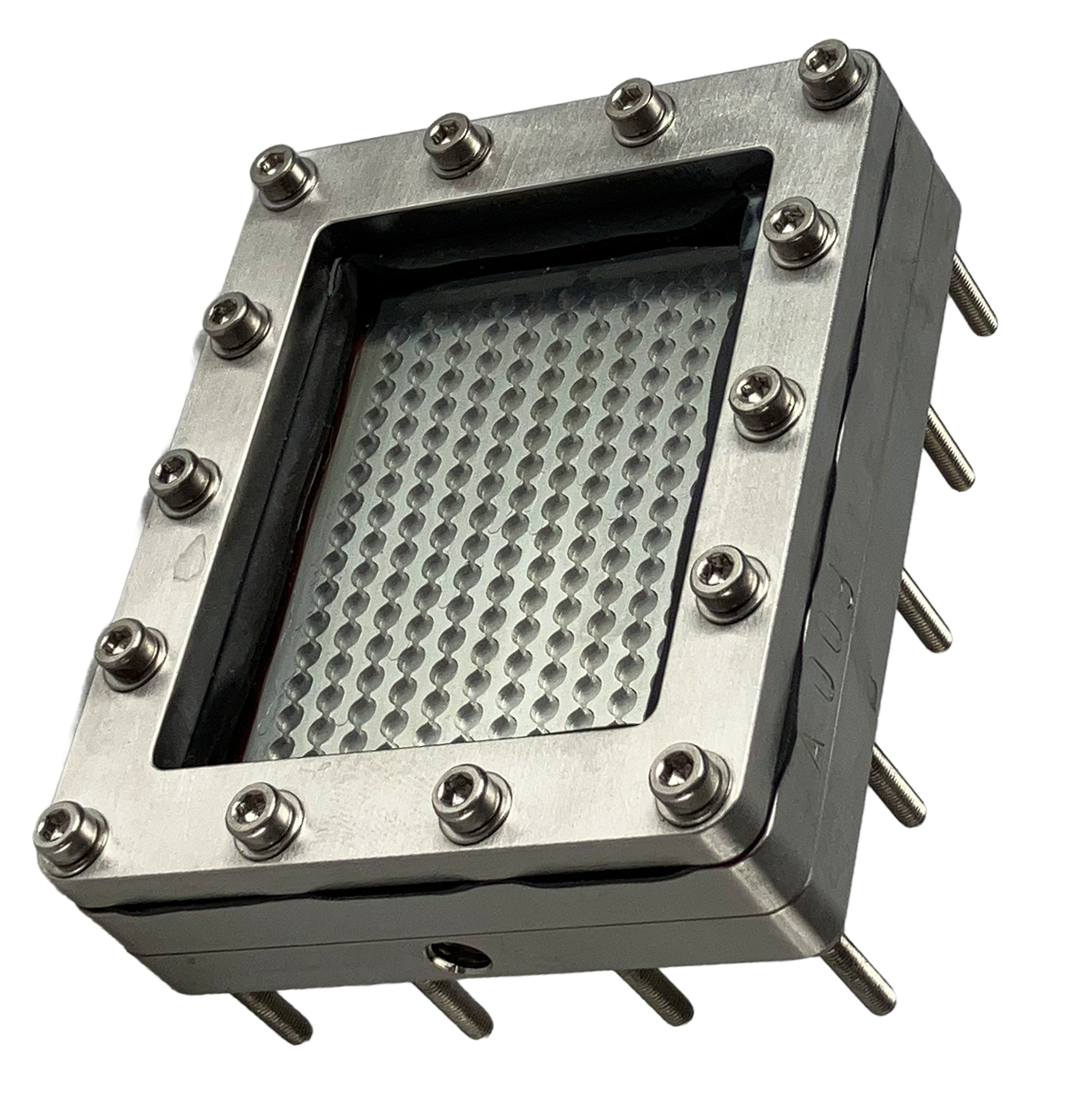
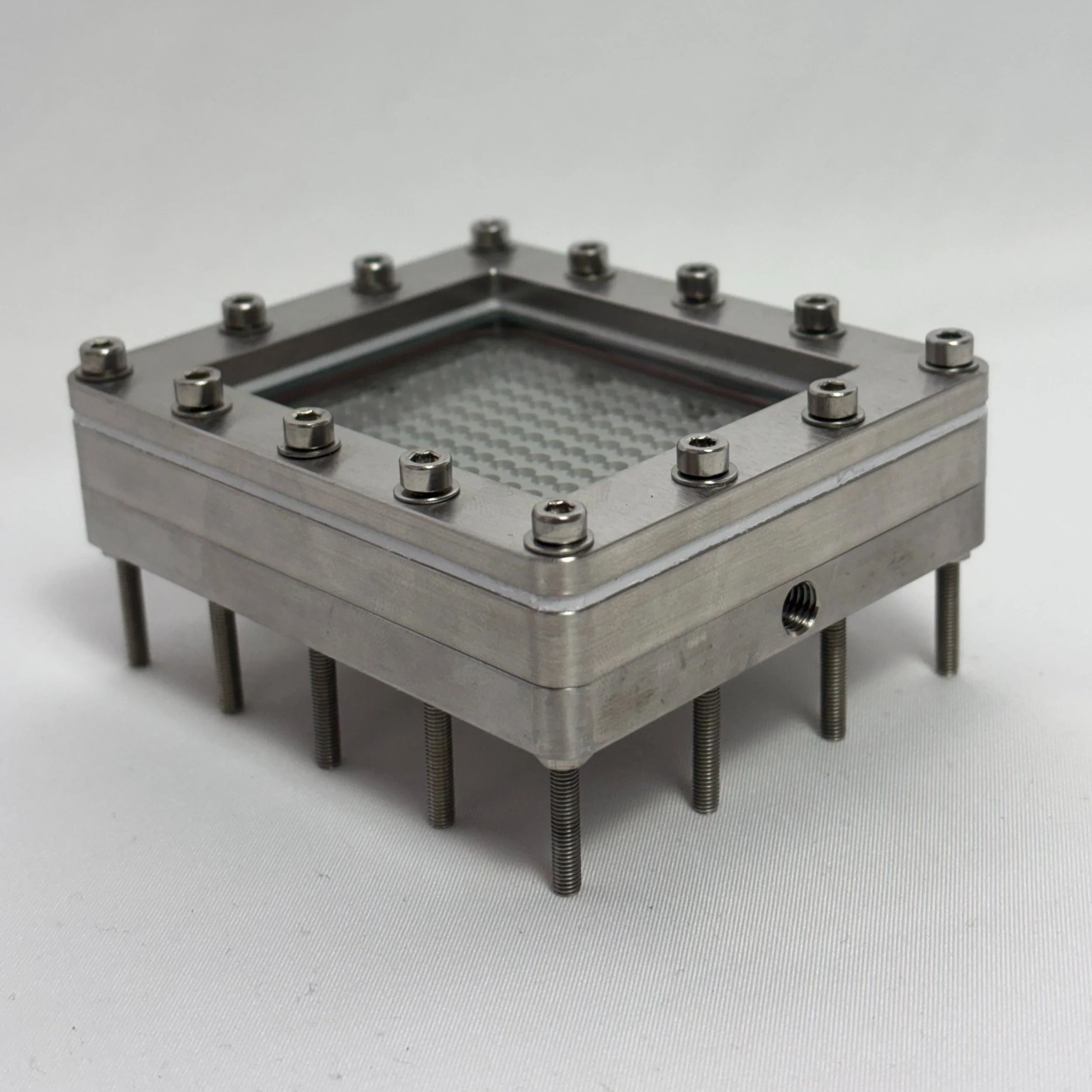
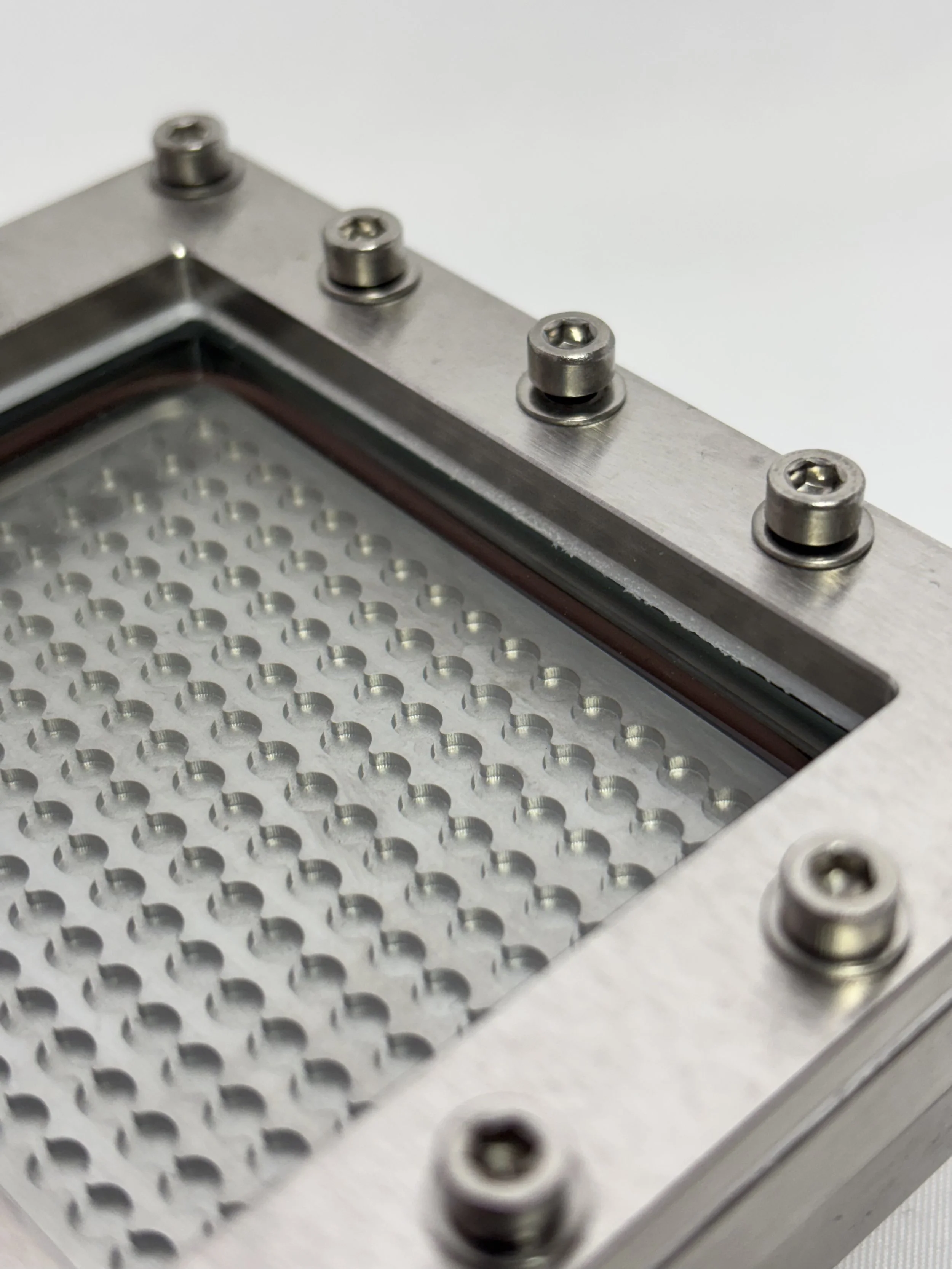
The Bubble Reactor is a flow reactor that uses a contraction-expansion channel geometry to generate pulsating flow and local turbulence, significantly enhancing gas–liquid mass transfer even under otherwise laminar conditions.
Specifications:
Volume: 1.47 mL

Illuminated area: 14.69 mm²

Depth: 1 mm

Channel width: 1 mm

Flow cross section: 1 mm²

Temperature range: -20/200°C (up to 300°C on request)

Pressure range: Up to 12 bar

Residence time: ~ 4-3200 seconds

Materials option: Stainles²s steel, Hastelloy, Cu, PEEK, Anodized Al

Window options: Borosilicate, quartz, ITO, Sapphire

Dimensions: 8.6 x 7.2 cmConsistent High-Quality Output
Ensures uniform results across various chemical processes, minimizing batch-to-batch variability.
Supports high-purity synthesis, ideal for demanding industries.
Advanced Fluid Dynamics
Optimized mixing and reaction rates to enhance overall process efficiency.
Improves reactant dispersion, reducing localized concentration gradients.
Rapid Reaction Time
Minimizes processing time while maximizing conversion efficiency and yield.
Reduces residence time, allowing for high-throughput manufacturing.
Key Benefits of the Bubble Flow Reactor:

Turbulent flow even in laminar conditions
Efficient static mixing
Efficient mass and heat transfer
Design and Operation:
Robust and Highly Efficient Structure
Modular design made of stainless steel and corrosion-resistant materials, ensuring durability and compatibility with a wide range of reactants.
Optimized configuration for seamless integration with existing industrial equipment and processes.
Simplified operation, reducing the need for manual intervention and maintenance.
Possible applications:
Best for gas–liquid flow reactions where improved mixing and reduced concentration gradients can increase mass transfer and reaction consistency. Pulsing enhances interaction between fluid layers and helps bring reactants together more effectively.

Liquid-Liquid
Homogeneous dispersion of immiscible fluids.

Gas-Liquid
Enhances mass transfer in catalytic or absorption reactions.
Applications
The Redeem Bubble Reactor is the ideal solution for a wide range of industries, including:

Pharmaceutical Industry
Synthesis of active ingredients with high purity and repeatability.
Chemical Industry
Production of polymers, catalysts, and fine chemicals.

Energy sector
Applications in biofuels and thermal conversion processes.

Nanotechnology
Production of nanoparticles and advanced materials.